
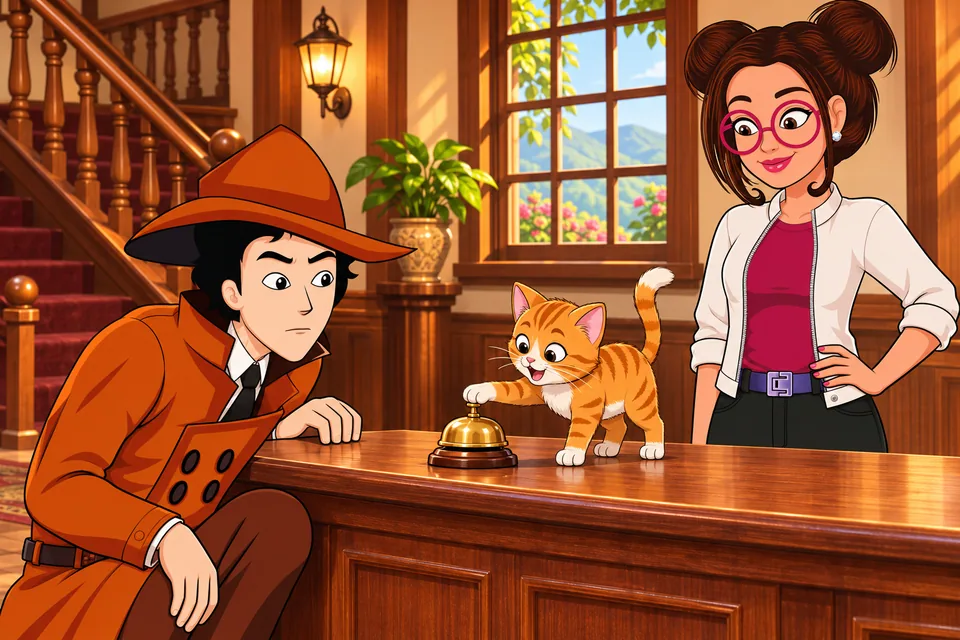
1. The smallest suspect
DING.
Chiang reached the reception desk first.
No visitor. No moving door. No mysterious shadow.
Then something underneath the counter sneezed.
“Our invisible criminal has a cold,” Aalia whispered.
A tiny ginger kitten climbed onto the counter and planted one white paw on the bell.
DING!
“Momo!” the owner cried. “Breakfast is NOT served by ringing that!”
Aalia looked delighted. “Finally. A suspect with excellent priorities.”
Mehul smiled—but only briefly.
The photograph on Aadi’s laptop was still waiting upstairs.
Someone had used his name to book their rooms. Someone had sent a picture of him asleep beside a Society letter.
“One mystery solved,” he said. “Two very serious ones left.”
2. Aalia knows that photograph
Back upstairs, Aalia leaned towards the picture.
“Wait. I took this!”
Aadi almost dropped his tablet. “You were the secret photographer, sir?”
“Months ago, after a late case. It was in our Club behind-the-scenes slideshow.”
She found the original on her phone.
Same lamp. Same chair. Same sleeping Mehul.
But on the desk lay a blue notebook.
Not a Society letter.

“Someone pasted the envelope into the photograph,” Mehul said. “They wanted us to believe they had been inside my study.”
Aalia folded her arms. “And they cropped out the best part.”
“Which part?”
“You snoring.”
“Photographs don’t have sound.”
“This one nearly did.”
Aadi compared the full original with the attachment. The lamp, chair and folds of Mehul’s coat lined up. Only the desk object had changed.
Their frightening photograph was a trick.
But who was playing it?
3. The newspaper detective
The next morning—the morning of the exhibition—Liana and Chiang visited the print shop beside the guesthouse.
On a paper bag sat the same purple crescent-and-diamond stamp as their tickets.
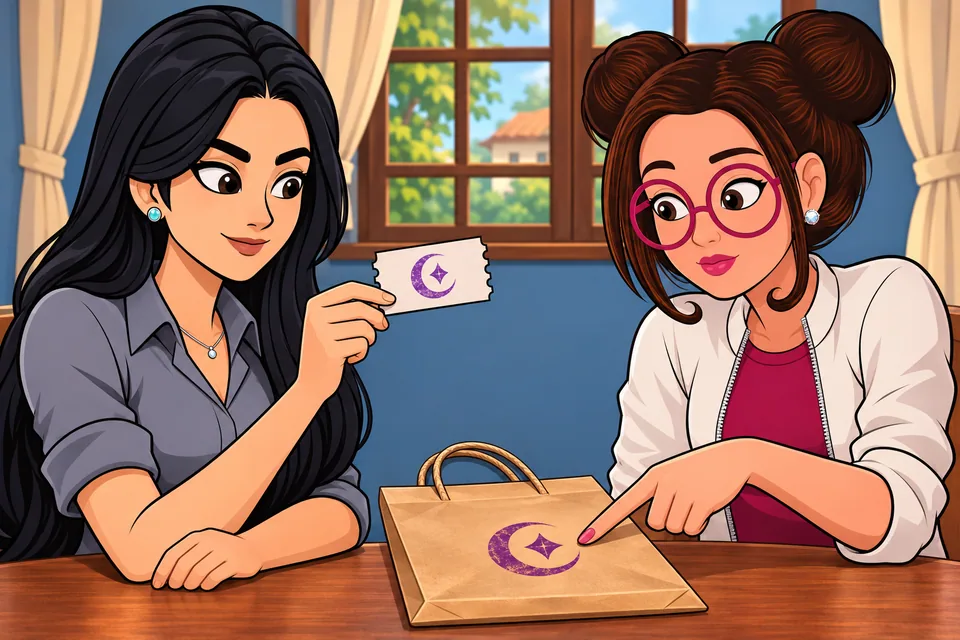
Behind the counter stood the man in the blue scarf.
He froze.
Chiang glanced at the newspaper beside him.
“Better this way up.”
The man turned it around. His ears went pink.
“I print wedding invitations,” he admitted. “I’m not good at being mysterious.”
His name was Nima. The exhibition’s logistics contractor had asked him to deliver tickets and watch until the five guests arrived.

“Why watch us?” Liana asked.
“He said important visitors needed… discreet assistance.”
“Did that include the sleeping photograph?”
Nima shook his head. He showed them the printing order and delivery receipt.
One name appeared on both:
DEV SETHI — EXHIBITION LOGISTICS.
An order was a lead, Mehul reminded them over the earpiece. It did not prove everything Nima had been told was true.
4. Old rooms. New names.
At the guesthouse, Aadi and the owner checked the booking history properly.
“Sir! We looked at when the rooms were reserved. We didn’t check when our names were added.”
The first record held eight rooms for exhibition staff. The old staff reservation was real.
But yesterday, five entries had been renamed. The other three had been cancelled.
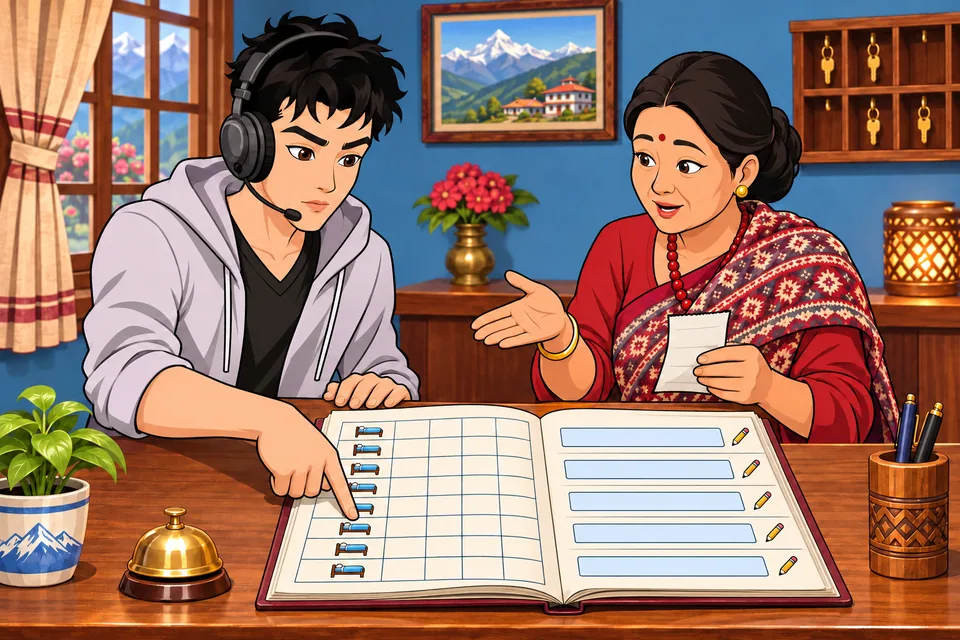
Liana joined the call. “I requested exhibition visitor access while we were travelling yesterday, using our cover names and photographs. I never booked rooms.”
“And the logistics office handles those requests,” Aadi said.
Someone there could have recognised Mehul, copied the five names and made an ordinary old reservation look impossible.
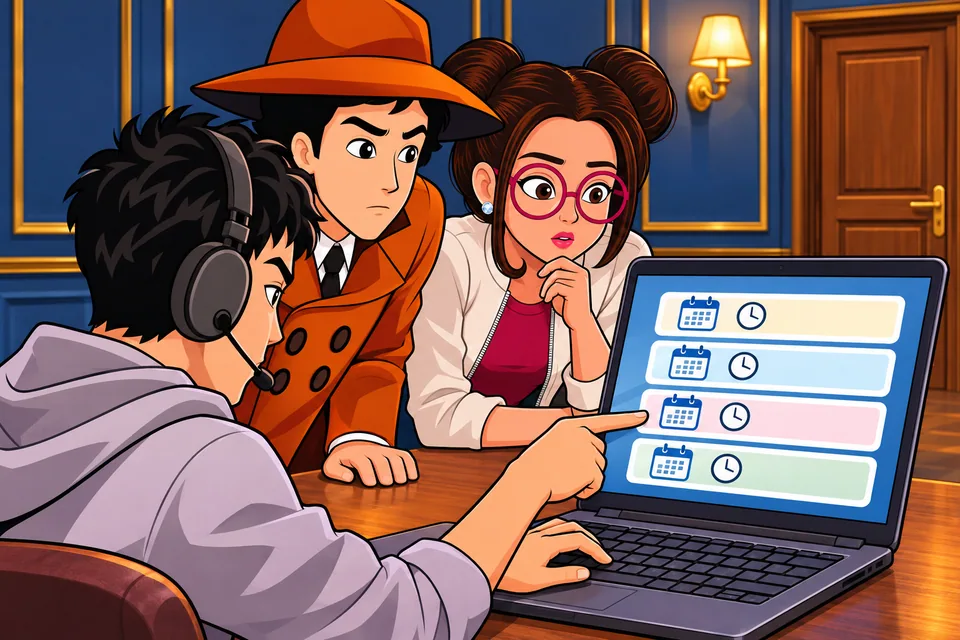
“So nobody predicted the future,” Aalia said.
“They changed the past on a screen,” Mehul replied. “Or tried to.”
5. Welcome to the exhibition
By mid-morning, the team reached the Himalayan Heritage Exhibition.
Director Mira welcomed them. Beside her stood a smiling man in a tan blazer.
“Dev Sethi,” he said. “I make sure everything runs smoothly.”
“Including our hotel?” Mehul asked pleasantly.
Dev’s smile paused.
“A little hospitality.”

Mira showed them the main exhibit: a golden Sunbird medallion, a bird inside a circle of sunrays.
Beside its glass case hung the bronze bell from the Society photograph.
“Our sound-and-light introduction begins at 4:15,” Mira explained. “We’re testing the sound shortly.”
Liana crouched, keeping her hands clear of the bell.
Her smile disappeared.
“Mehul. Look inside.”
The bell had no clapper—the swinging piece that strikes the metal.

From somewhere beneath them came a deep, clear note.
DOOOONG.
The bell had not moved.
Mehul looked towards the wooden stand.
“Then what,” he asked, “are we actually hearing?”