
Missing piece puzzle
Que. 226
Can you guess the missing piece?
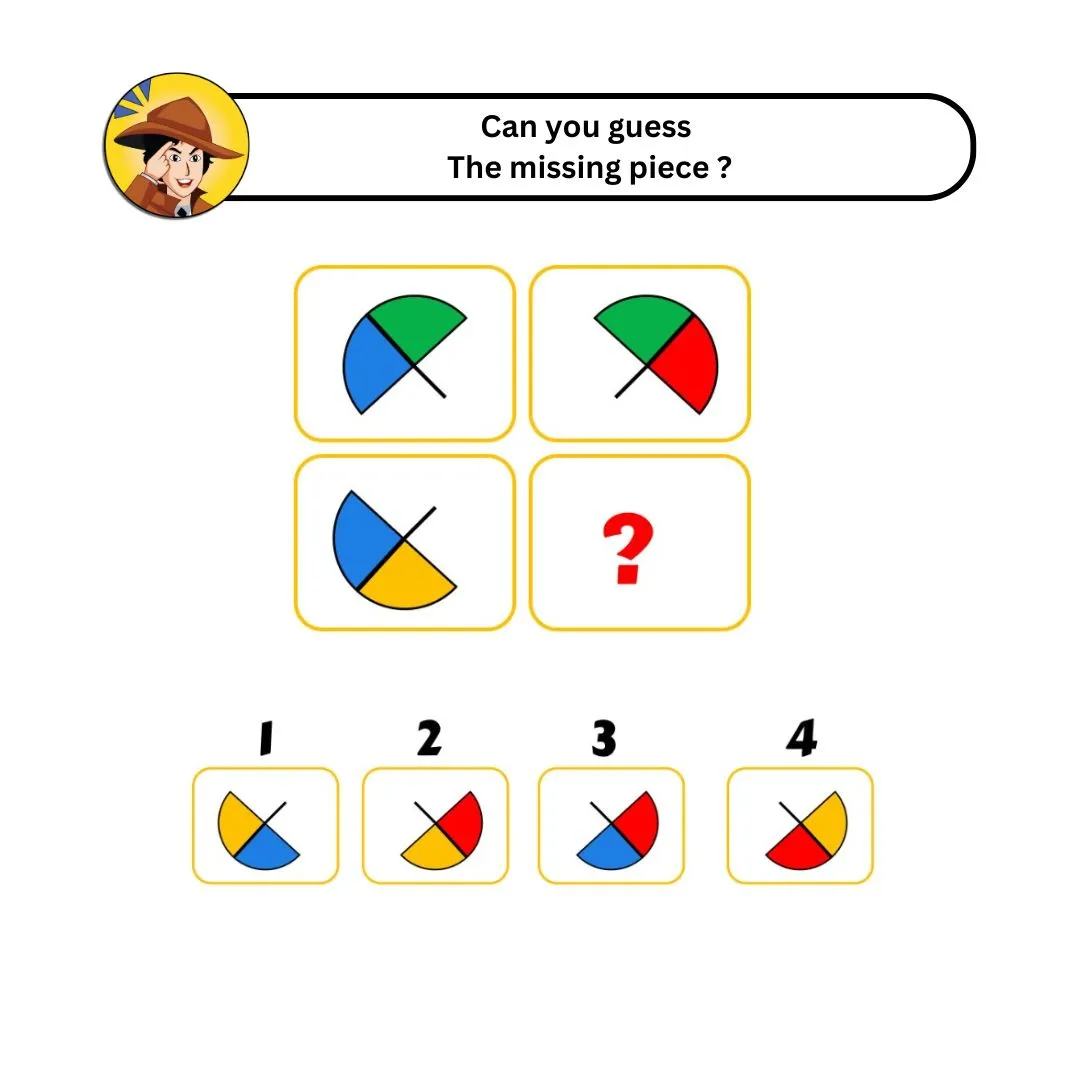
- 1
- 2
- 3
- 4 2
Join one of the top clubs for logical people! Detective IQ Club offers daily riddles and puzzles to challenge your mind and boost your IQ. Engage with a community of sharp thinkers and solve mysteries every day.
Can you guess the missing piece?
Solve this math cube puzzle !
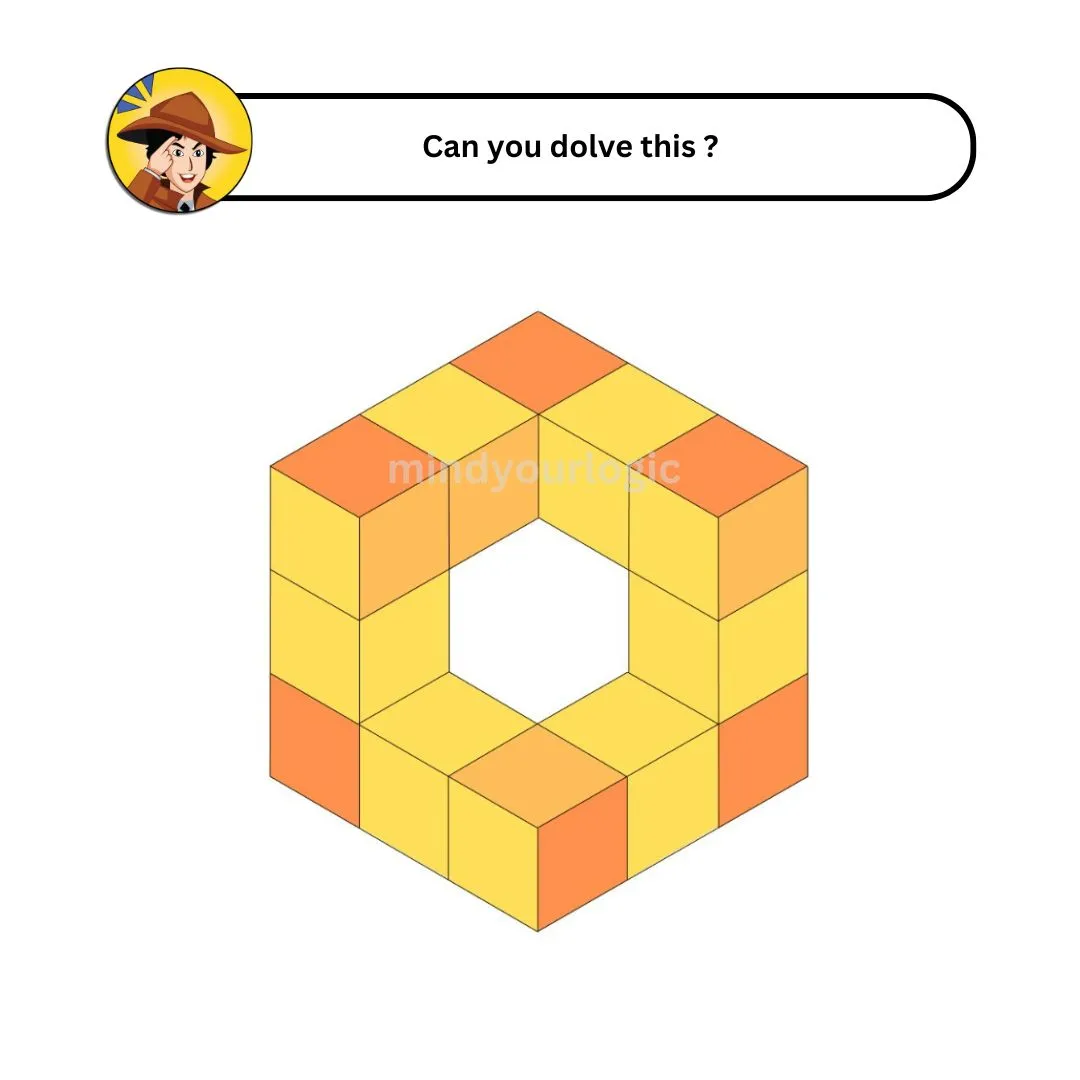
There 9 cubes in each layer... so total 27 cubes will needed to make the big cube
Currently there are only 12 small cubes.
So 15 more cubes will needed
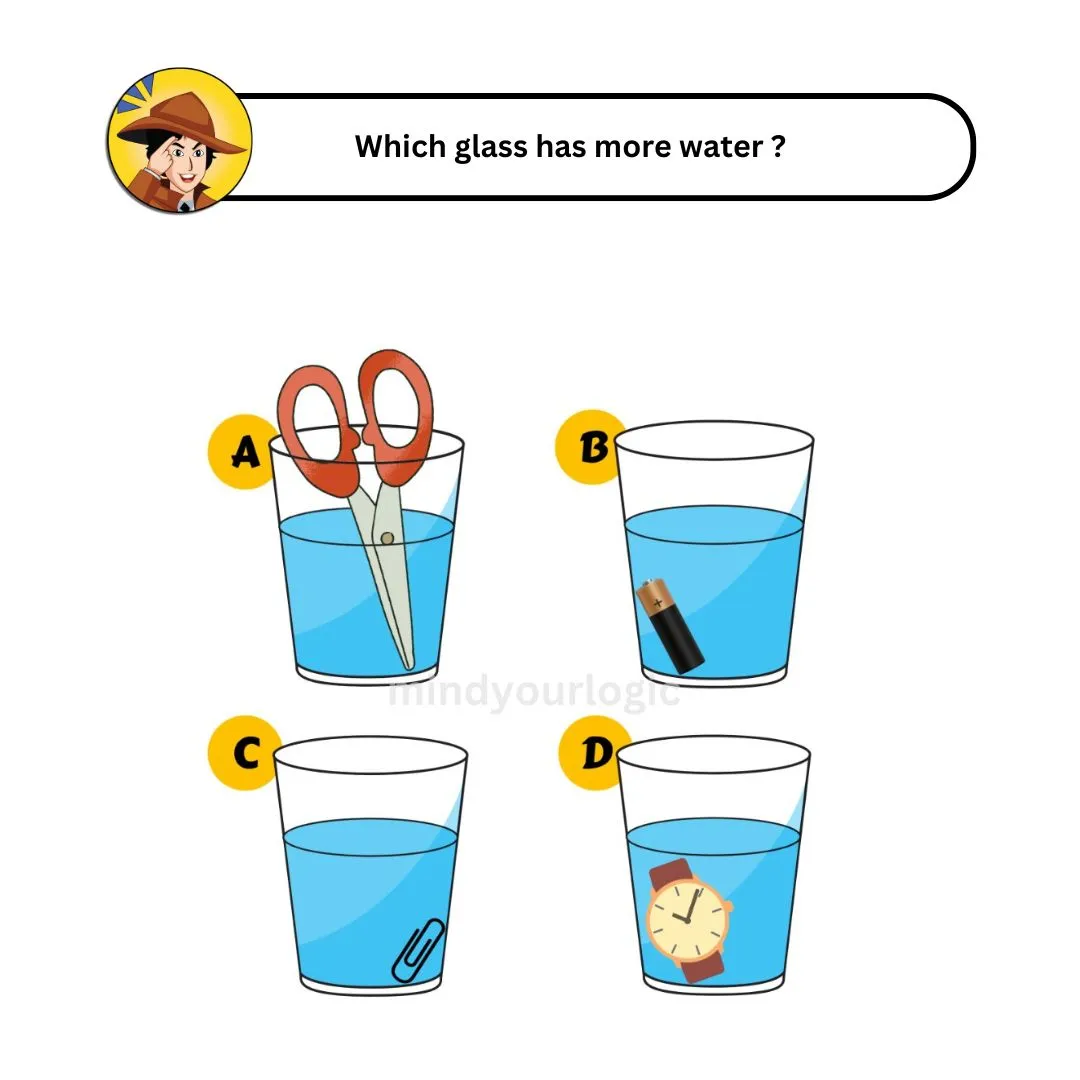
Which glass has most water?
Find the odd one out !
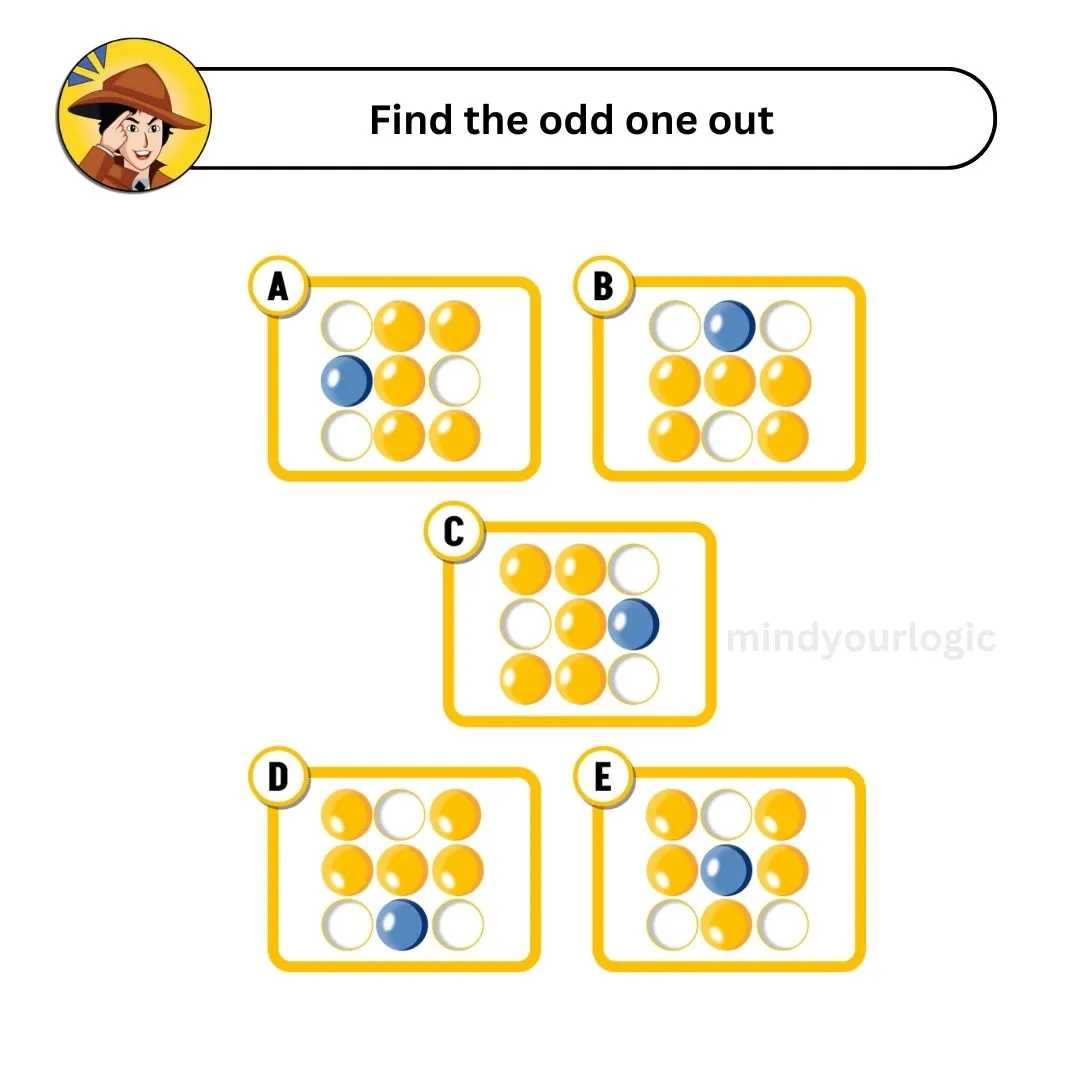
The correct answer is E

Can you find the missing number?
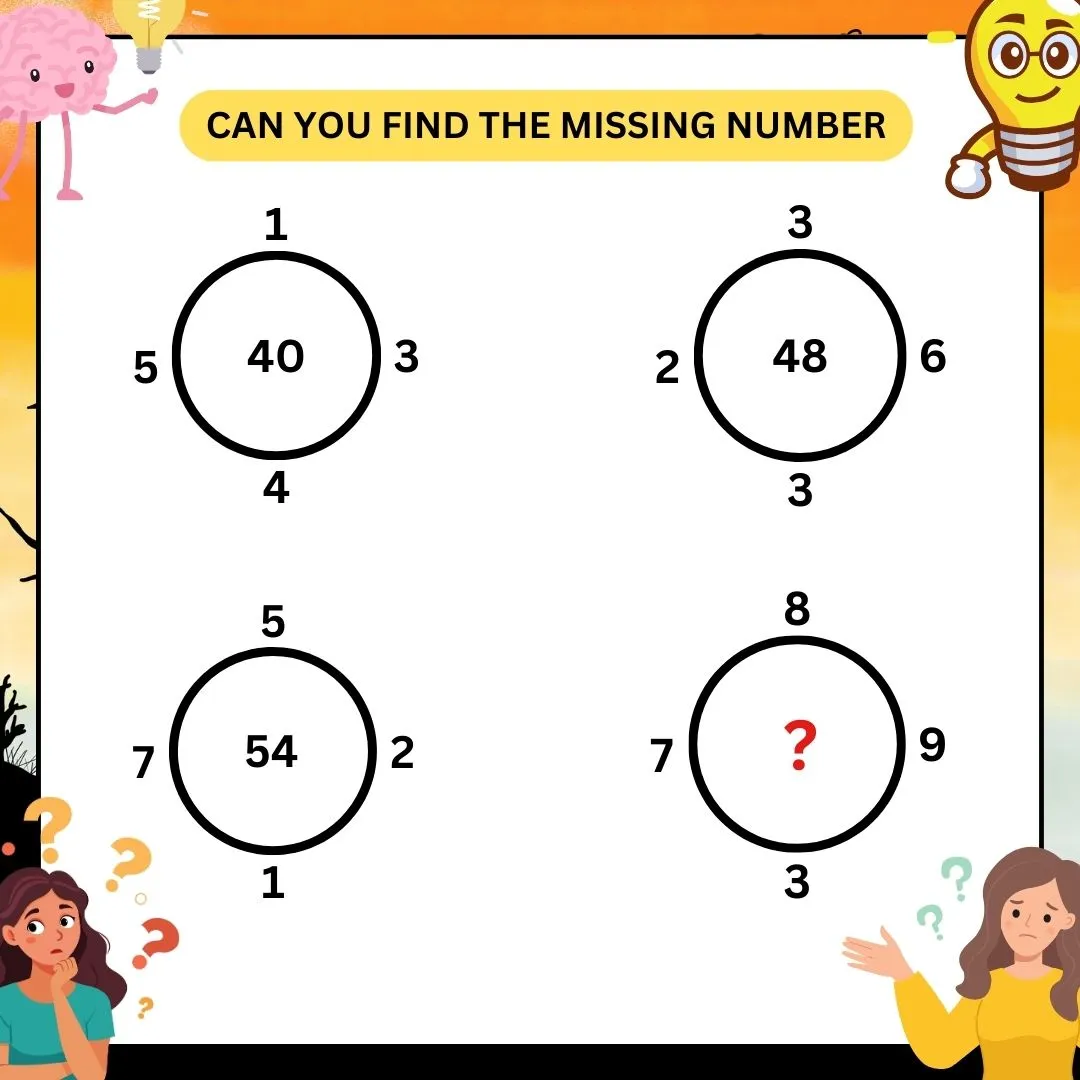
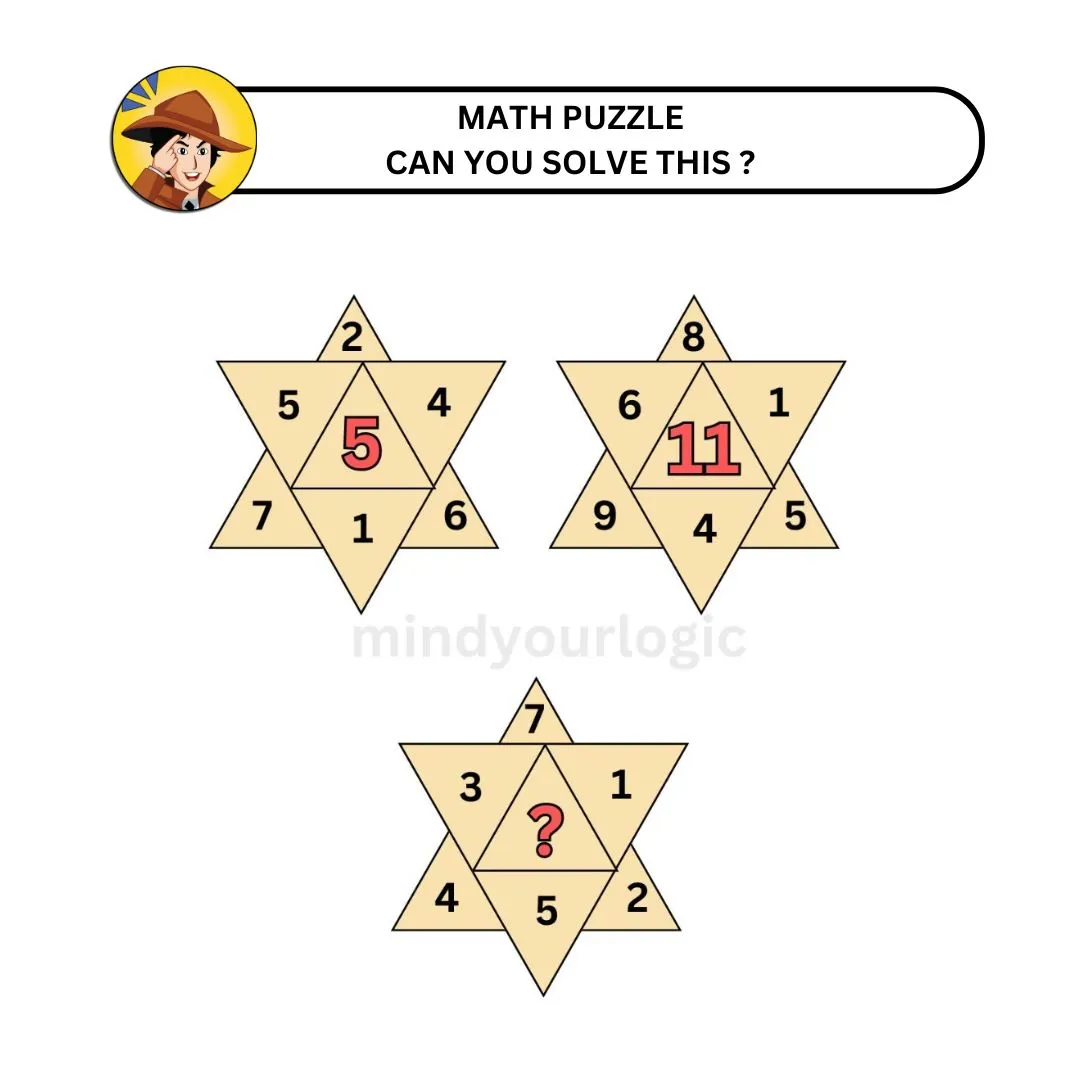
Each equation follows a consistent pattern: add opposite numbers from the circle and then multiply the results. Let's break down each equation.
1. *First Equation:*
- Step 1: Add opposite numbers:
- (1 + 4 = 5)
- (5 + 3 = 8)
- Step 2: Multiply the sums from Step 1:
- (5*8 = 40)
Therefore, the result of the first equation is 40.
2. *Second Equation:*
- Step 1: Add opposite numbers:
- (3 + 3 = 6)
- (2 + 6 = 8)
- Step 2: Multiply the sums from Step 1:
- (6 * 8 = 48)
Therefore, the result of the second equation is 48.
3. *Third Equation:*
- Step 1: Add opposite numbers:
- (5 + 1 = 6)
- (7 + 2 = 9)
- Step 2: Multiply the sums from Step 1:
- (6 *= 54)
Therefore, the result of the third equation is 54.
4. *Fourth Equation:*
Given numbers: 8, 3, 7, 9
- Step 1: Add opposite numbers:
- (8 + 3 = 11)
- \7 + 9 = 16)
- Step 2: Multiply the sums from Step 1:
- \(11 * 16 = 176)
Therefore, the result of the fourth equation is 176.
Which number will replace the ?
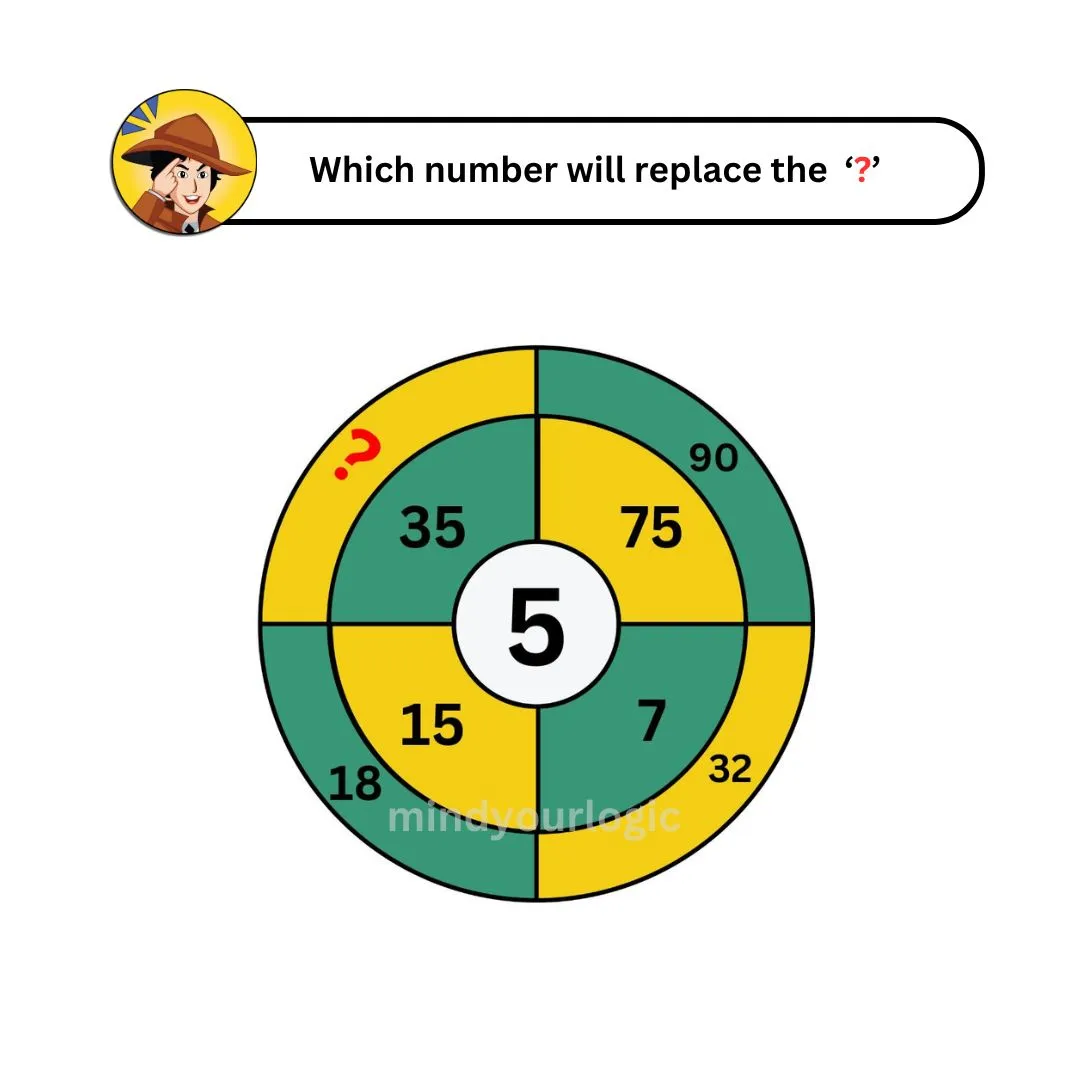
7 x 5=35
15 x 5=75
18 x 5=90
so, 32 x 5=160
Find the missing piece?
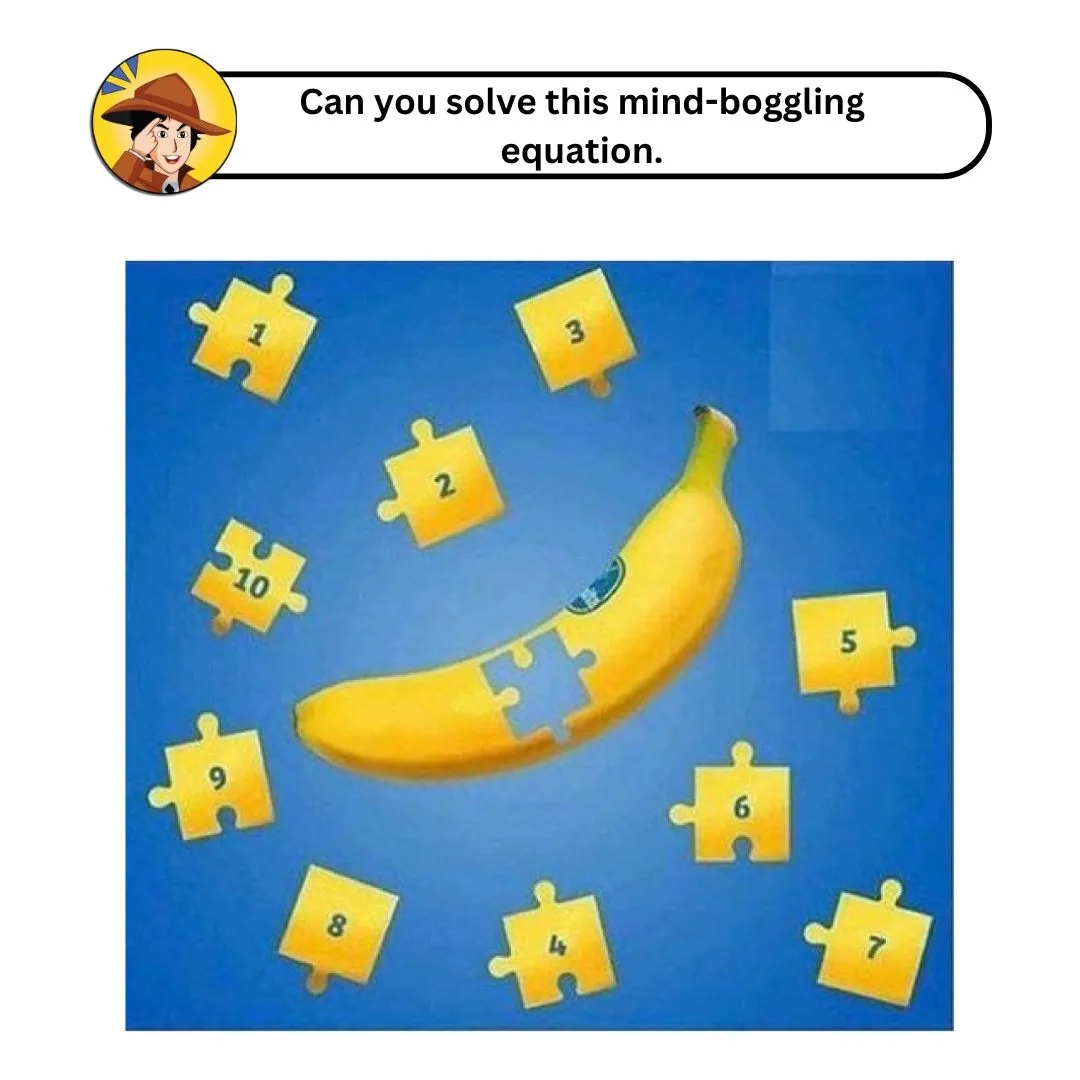
The correct answer is 10
How many orange cubes needed to hide blue cube?
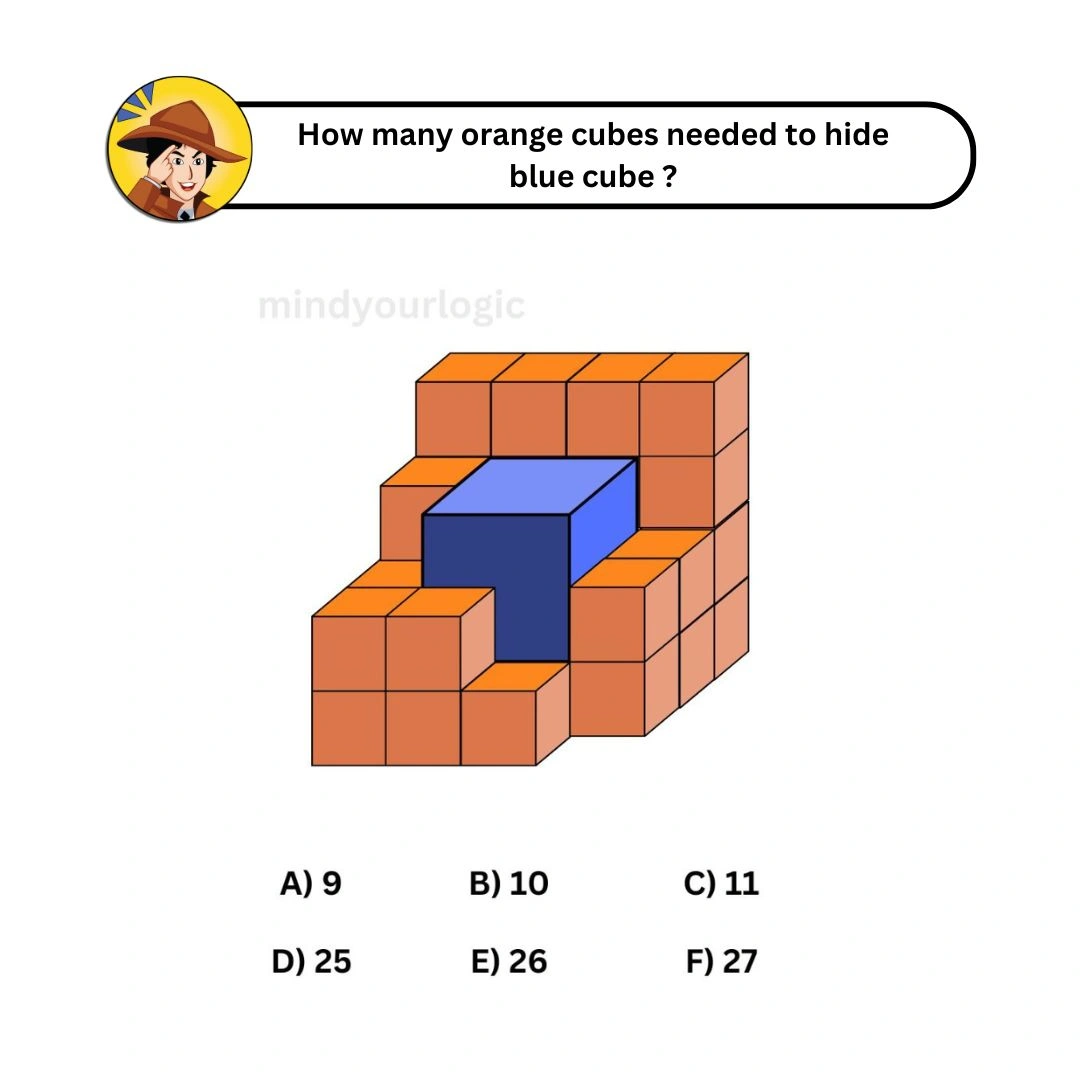
The correct answer is 10
Find the correct shadow !
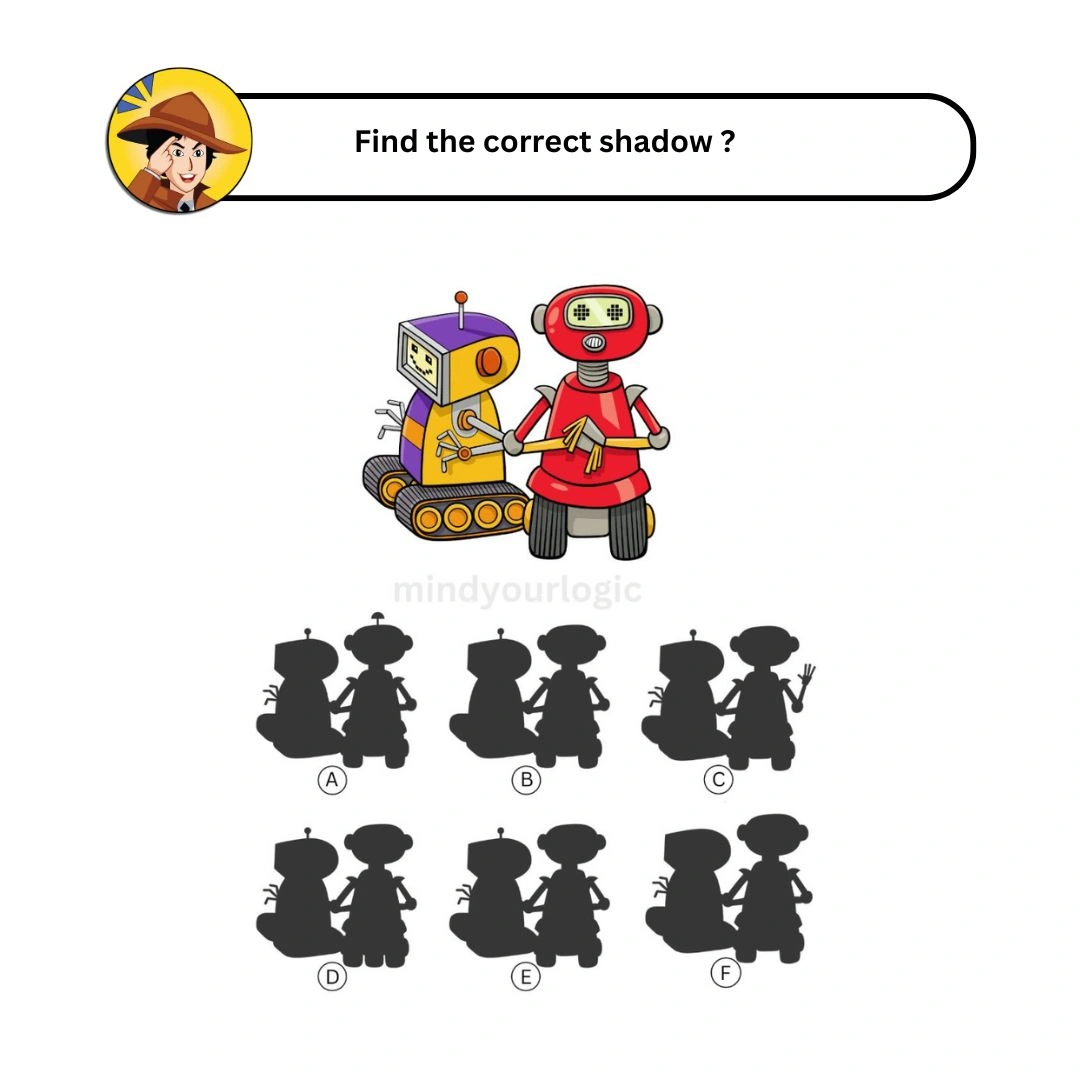
The correct answer is E
Which Lock does the key fit into?
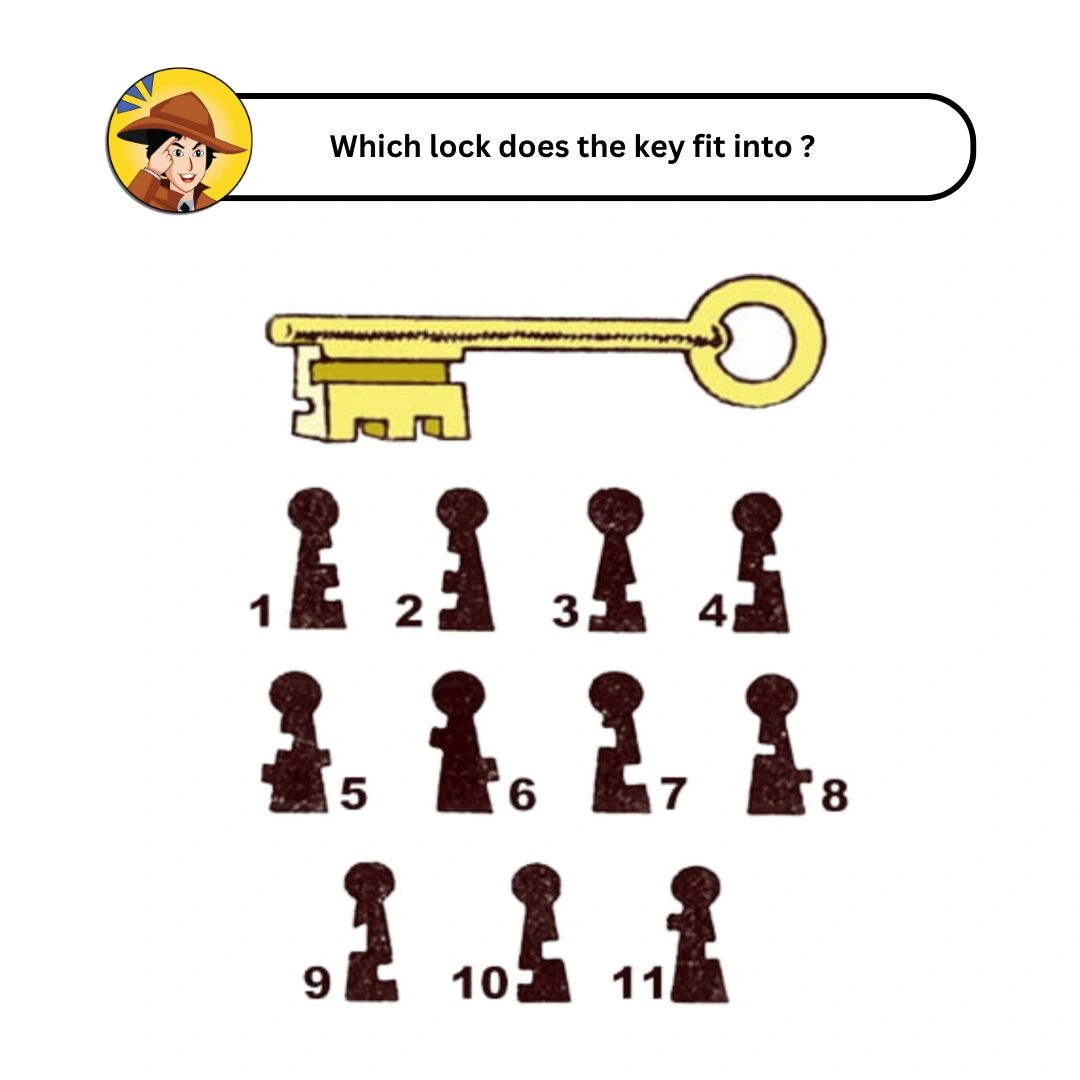
Correct answer is 7
WHich cube will perfectly fit in the empty space?
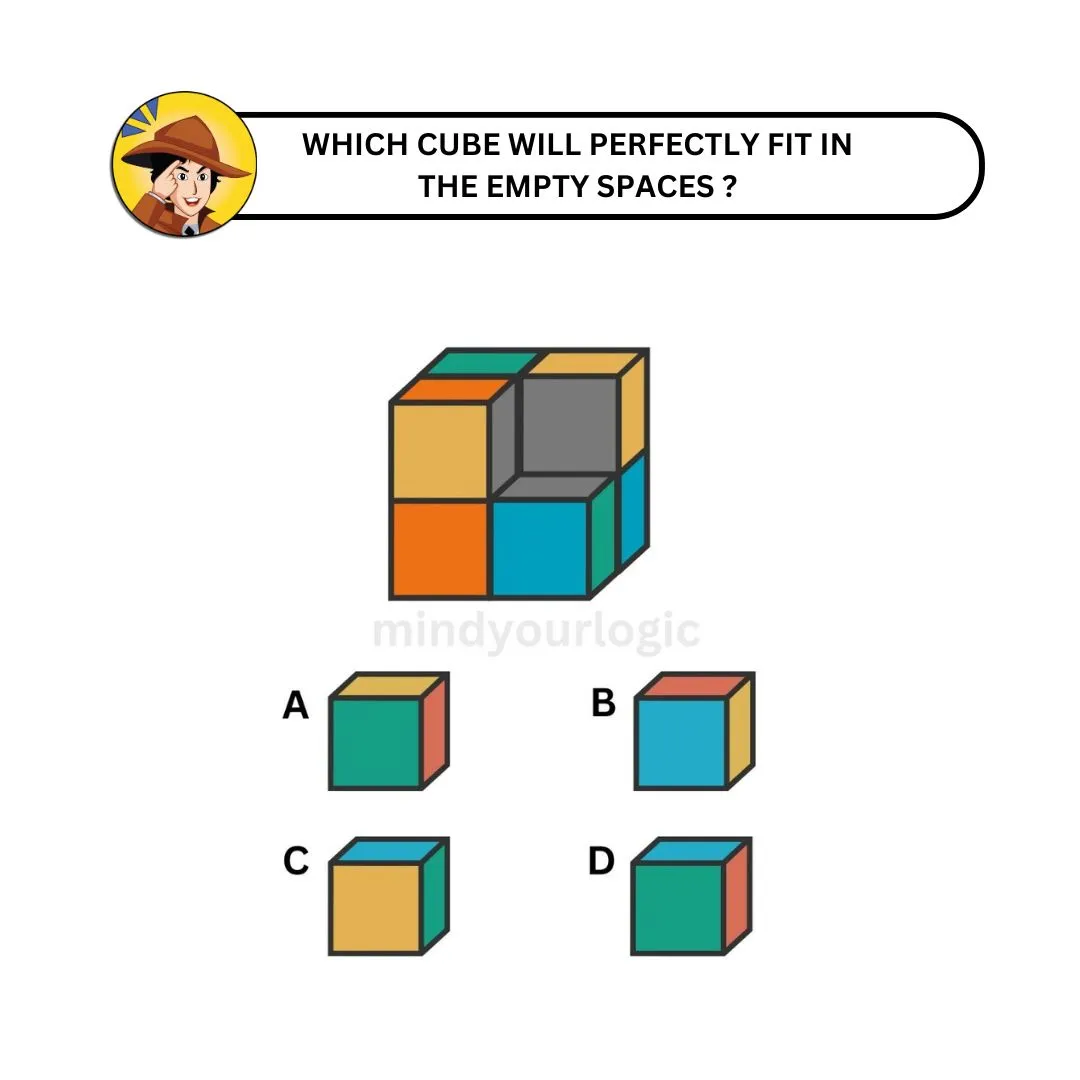
Can you solve this math puzzle?
How many bricks are needed to repair the wall?

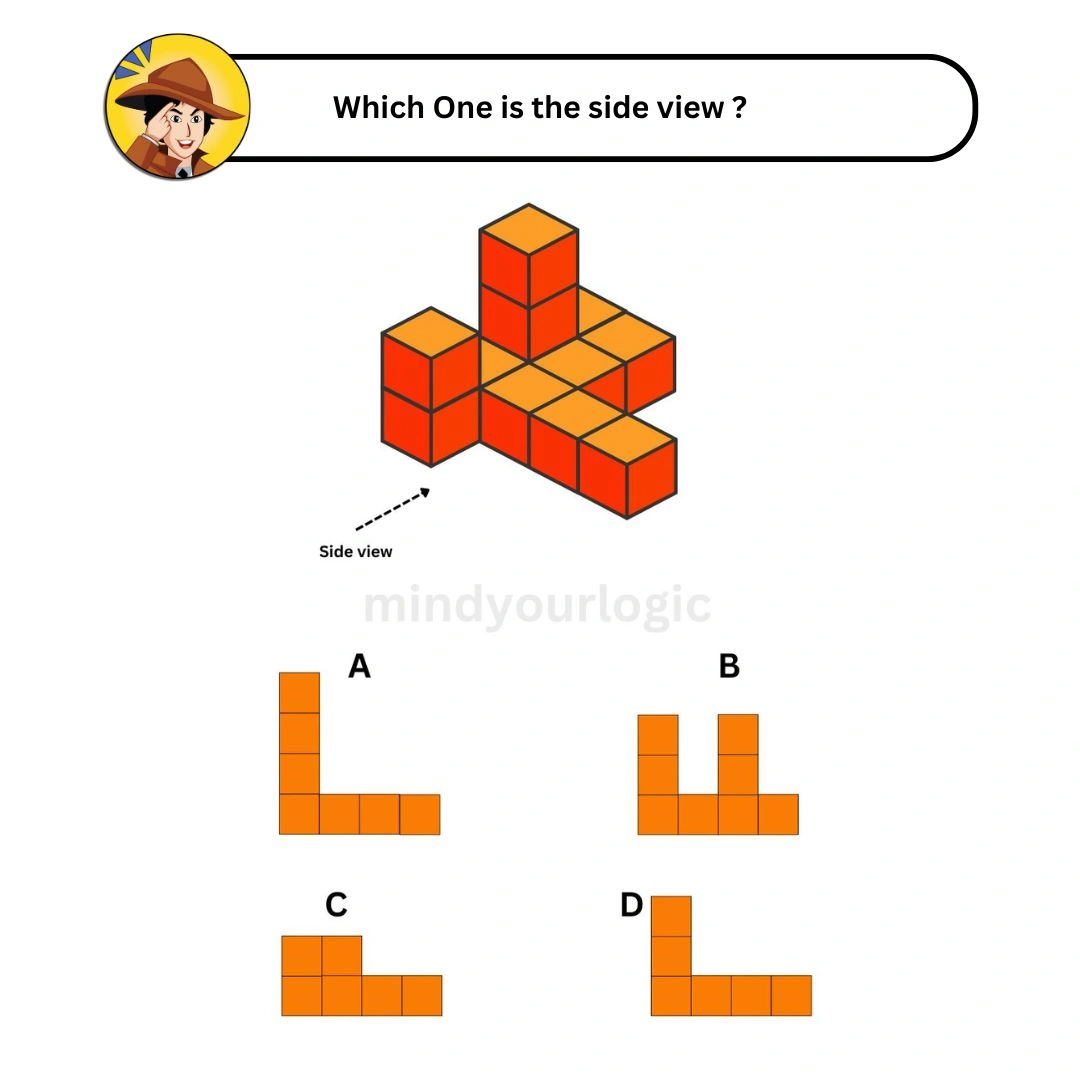
Which one is the side view?
What should be the time in last watch?
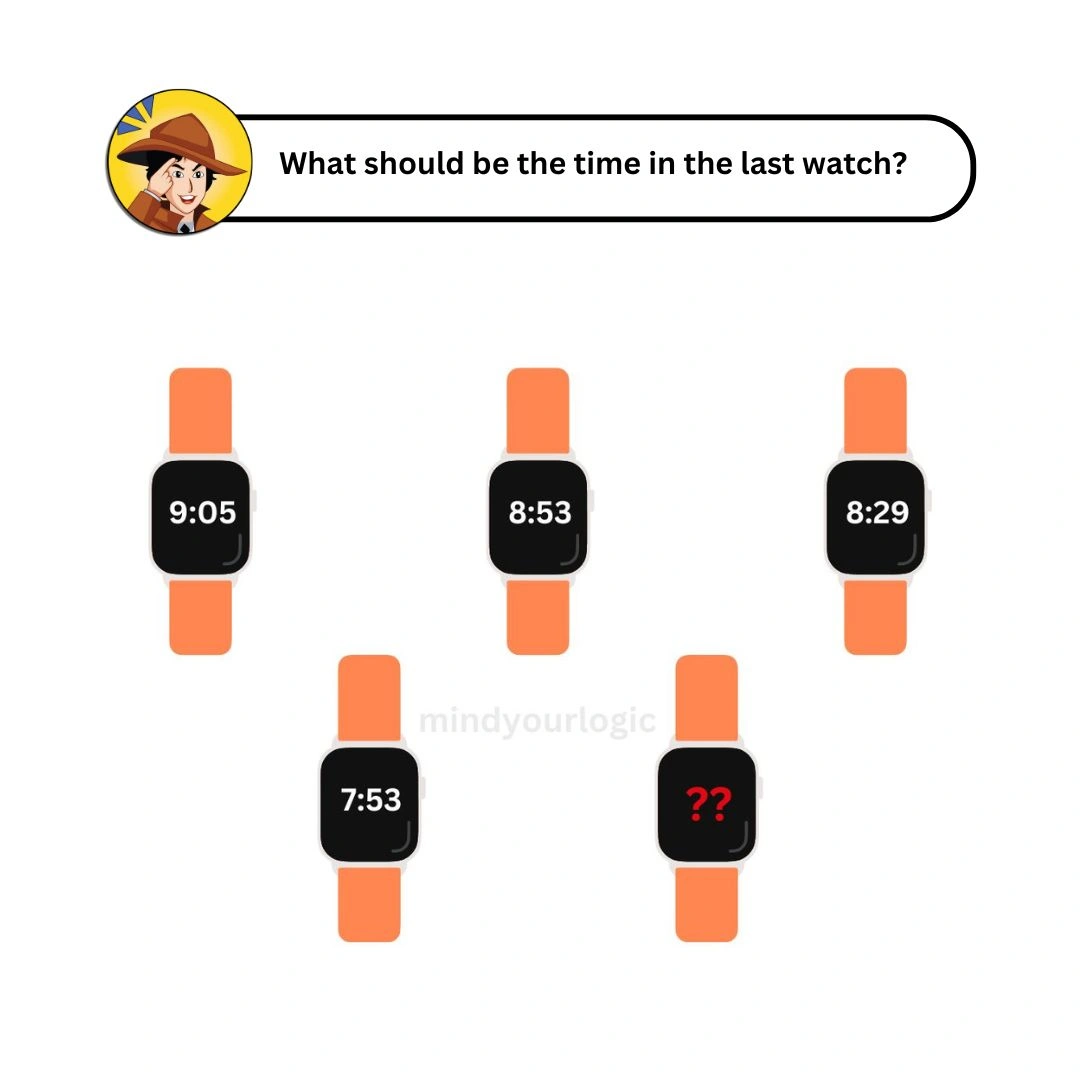
The times are part of a pattern where the difference between each successive time decreases by 24 minutes:
Following this pattern, the next subtraction should take away 48 minutes from 7:53, leading back to 7:05.